
The first aircraft restoration project that eventually led to the establishment of the Western Museum of Flight.
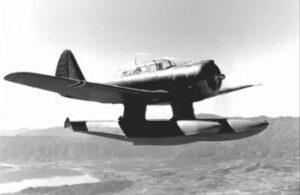
Northrop N-3PB test flight over Lake Elsinore, California, 1940–1941 (Photo: WMoF Collection)
History of the N-3PB: The first N-3PB (c/n 301) made its first flight from Lake Elsinore, California, on 22 December, 1940 with test pilot, Vance Breese, at the controls. The flight test and customer acceptance trials were completed with the presence of Norwegian officials and pilots at Lake Elsinore. Due to the use of the more powerful Wright Cyclone engine, all performance estimates were exceeded and flight characteristics including maneuverability were considered “excellent”. All 24 aircraft built were delivered to the exiled Royal Norwegian Navy Air Service by the end of March 1941. Training was conducted at “Little Norway” in Toronto Bay, Canada.

Surviving aircraft: After the war, two surviving N-3PB aircraft (c/n 306, 322) were flown from Iceland to Norway and sold for salvage, with c/n 306 being scrapped in 1949 and c/n 322 scrapped in 1956. After a search through records, Ragnar R. Ragnarsson, then vice president of the Icelandic Aviation Historical Society, pinpointed the crash site of N-3PB (c/n 320, coded GS*U). In 1979, the N-3PB wreck was recovered from the Þjórsá River in Iceland. Due to bad weather over Iceland’s east coast, this N-3PB flown by Lt. W. W. ‘Sevi’ Bulukin, operating from Búðareyri and transiting to Reykjavik, made a forced landing on 21 April 1943. Through the years, it gradually sank to the river’s bottom where it remained stuck in the silt for over 36 years.
The N-3PB Restoration: The project started in 1979 when Northrop Corporation, in partnership with the Icelandic Aviation Historical Society and the Norwegian Aviation Historical Society, began a recovery effort to salvage and restore the rare N-3PB World War II-era aircraft, which had crashed in Iceland in April 1943 while serving with the Royal Norwegian Navy Air Force. The aircraft’s remains were recovered, crated and transported via a RNoAF C-130 to the Northrop plant in Hawthorne, California in 1979.
The Volunteers: About 340 volunteers worked on the plane, many on their own time, eventually completing the restoration by November 1980. A few were former Northrop employees who had worked on the original N-3PB production line in 1941.
The Museum’s Founding: The successful completion of the restoration inspired the creation of an Aerospace Museum to preserve other vintage aircraft. This led to the formation of the Southern California Historical Aviation Foundation in 1983, which operates the Western Museum of Flight today.
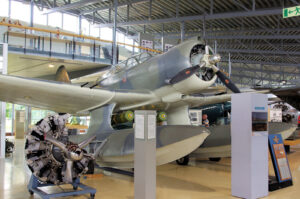
The N-3PB was presented back to Norway after its restoration rollout in 1980 and is on exhibit at the museum in Gardermoen, Norway.
One other notable aircraft restored by volunteers associated with the museum have included: 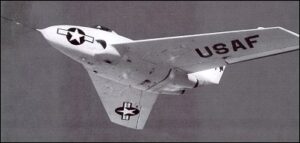
The Northrop X-4 “Bantam”, a post-WWII experimental aircraft, now displayed at the National Museum of the United States Air Force in Ohio.
Our Vision and Mission Statement
“To capture the imagination and inspire achievement through memorable experiences that celebrate the rich Southern California Aerospace Legacy”
The Western Museum of Flight honors and champions the aerospace industry heritage of Southern California and inspires, motivates, and educates the dreamers and creators of today and tomorrow.